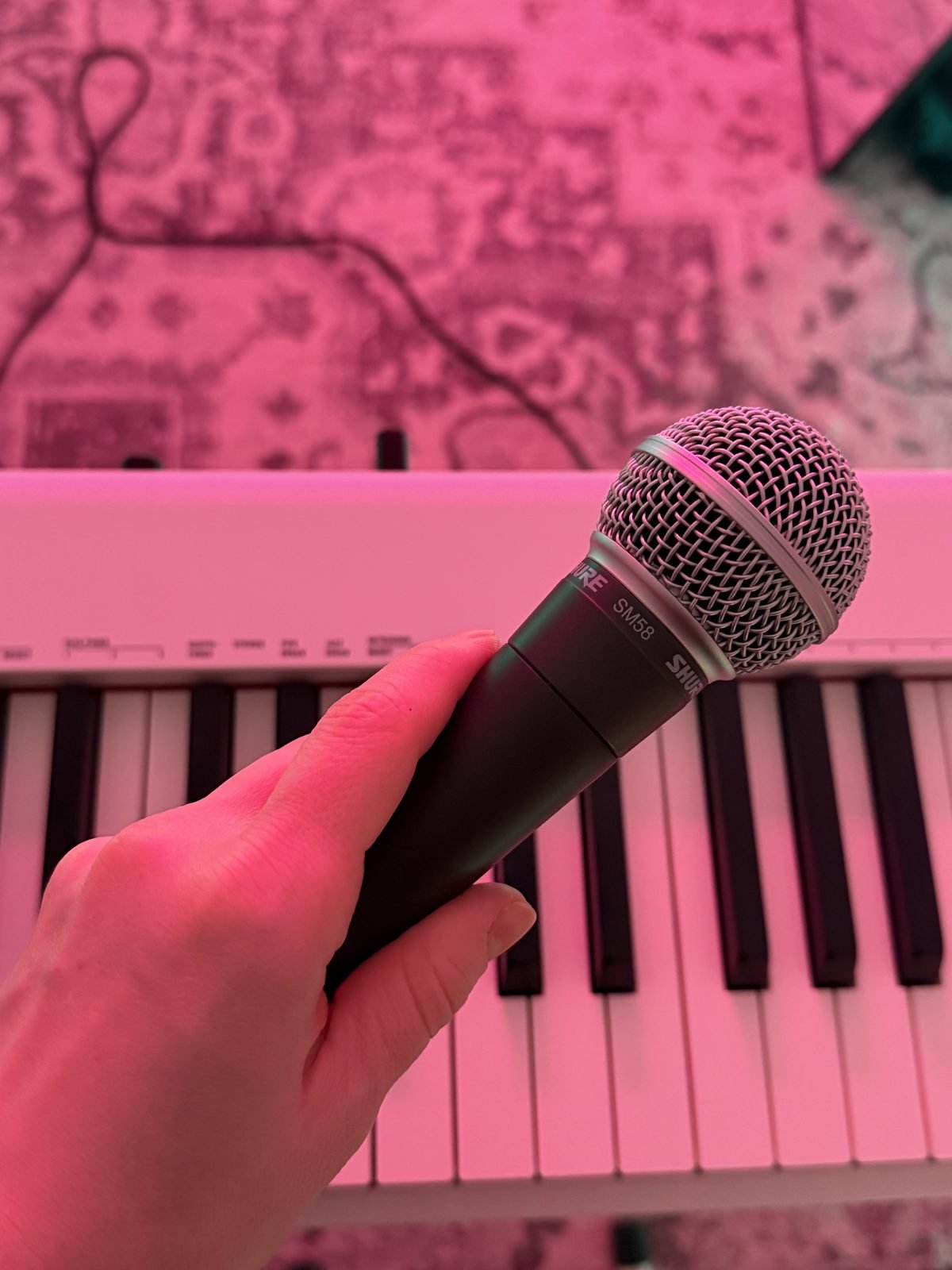
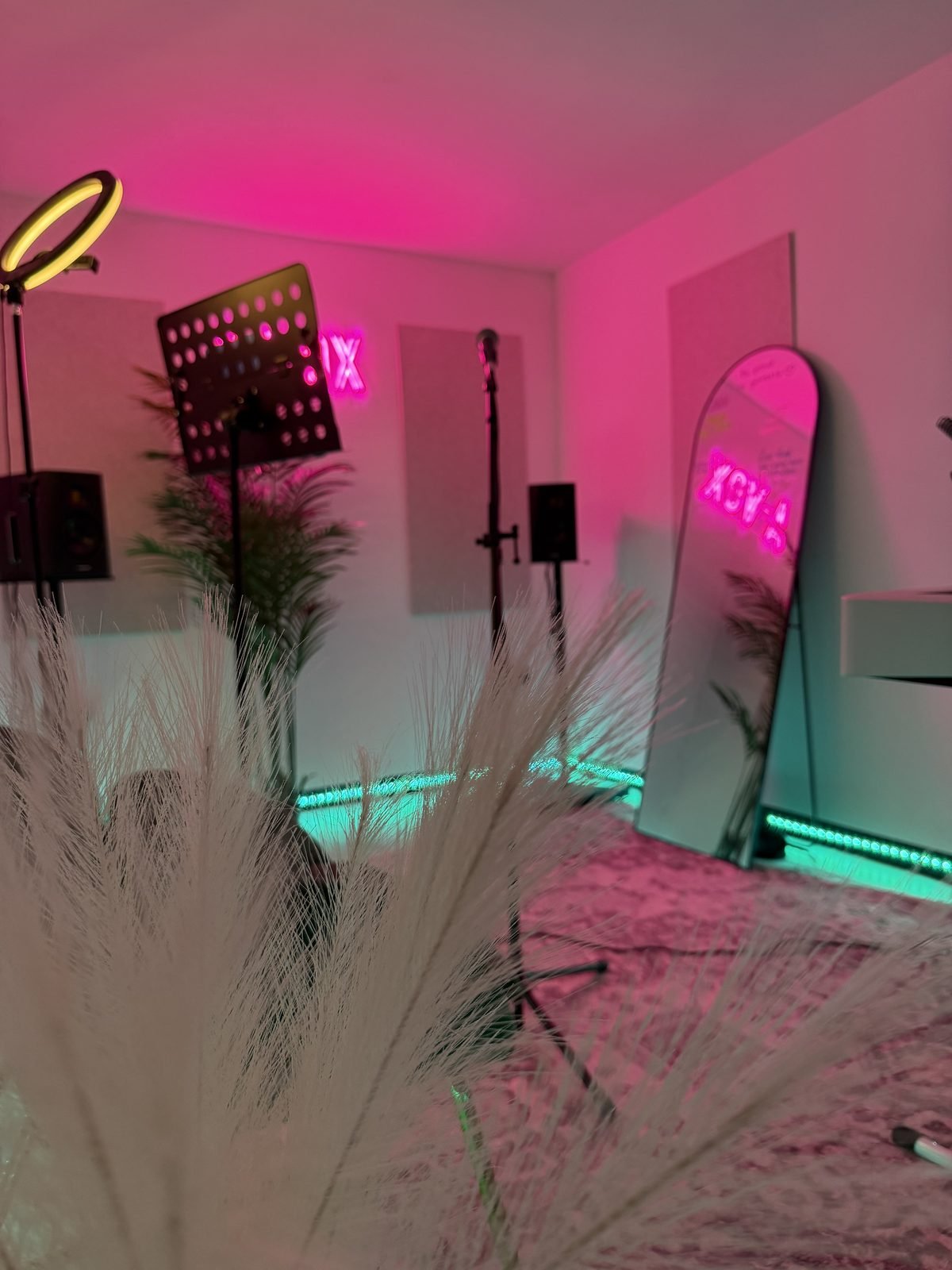
A-VOX is a neurodivergent-friendly music studio in Bermondsey, central London. We welcome students with ADHD, autism, anxiety, dyslexia, sensory sensitivities or other learning differences — for both vocal and piano lessons, at any age and any level.
What "neurodivergent-friendly" actually means here
This phrase gets used a lot online without much behind it. At A-VOX it means specific, practical things:
- The studio environment has been built around sensory comfort — soft ambient lighting (no fluorescent overheads), acoustic panels that dampen echo, a comfortable rug, no clutter, no scented diffusers.
- Lessons are structured flexibly — we can shift the format mid-session if it's not working, take breaks without explanation, sit instead of stand, end early if you've hit your limit. None of these need to be earned.
- Oleksandra has direct experience teaching neurodivergent students of all ages and adapts her communication style to what works for you — explicit instruction, visual aids, demonstration first then explanation, or however your brain learns best.
- Nothing is "performance" until you want it to be. There's no expectation that you'll sing or play in front of anyone other than your teacher. You set the pace.
Who we work with
Common profiles among our students include:
- ADHD — adults who feel they can't focus on a lesson long enough to make progress; children whose previous music teacher said they were "too distracted to learn".
- Autism — students who experienced sensory overwhelm at school music lessons; those who need predictability, clear structure, or a teacher who doesn't insist on eye contact.
- Anxiety (performance, social or generalised) — adults who've always wanted to sing but couldn't get past the fear of being heard.
- Dyslexia and dyscalculia — students who struggled with traditional notation-based teaching and need a different way in.
- Sensory processing differences — students who need certain volume limits, specific instrument tones, or particular environmental conditions.
- PDA, dyspraxia and other profiles — we don't need a diagnosis to accommodate you. Just tell us what works.
You don't need to label yourself or explain everything. A simple "I'm sensitive to loud sounds" or "I need things in writing" is enough. We'll work with what you tell us.
How lessons are adapted
The first lesson is a conversation more than a lesson — we'll find out what's worked and not worked in the past, what your goals are, and what the studio can do differently from previous experiences. Practical adjustments we commonly make:
- Pace and breaks — shorter lessons (30 mins instead of 60), more frequent micro-breaks within a longer session, or longer warm-ups if transitions are hard.
- Communication — instructions written down rather than (or as well as) said aloud; clear signals for "we're moving to a new task now"; demonstration before explanation.
- Sensory adjustments — keyboard volume kept low, headphones available, lights dimmed, mic stand moved further away, fan turned off, no perfume worn that day.
- Structure — same activities in the same order every lesson if that helps; or deliberately mixing it up if monotony causes you to disengage. Whichever works for you.
- Goals — we set goals together, including what counts as "doing well" today. Sometimes that's hitting a high note; sometimes it's just showing up.
For parents bringing children
Parents and carers are welcome to sit in for the first lesson — and for as long after that as the child wants. Many neurodivergent children settle faster with a parent present, then ask to do lessons solo a few weeks in. Either is fine.
We'll always check in with you between lessons about what's working. If something isn't, we change it. There's no syllabus we're stubbornly committed to.
For adult learners
Many of our adult students are late-diagnosed (or self-identified) — finally giving music another try after a school experience that didn't suit them. Several are working musicians or teachers themselves; several have never sung or played before. All are welcome. The lesson is built around what your brain actually does, not around what a textbook says it should do.
Trying a lesson
A trial lesson is £20 for 30 minutes, with no commitment. Before booking, you're welcome to phone, email or WhatsApp with any questions about access, sensory environment or specific accommodations — we'll be honest about what we can and can't offer.
The studio is on the ground floor with step-free access, located on Page's Walk in Bermondsey (SE1 4SB), a few minutes from London Bridge, Borough Market and Tower Bridge.